1K
Loading Reference Work…
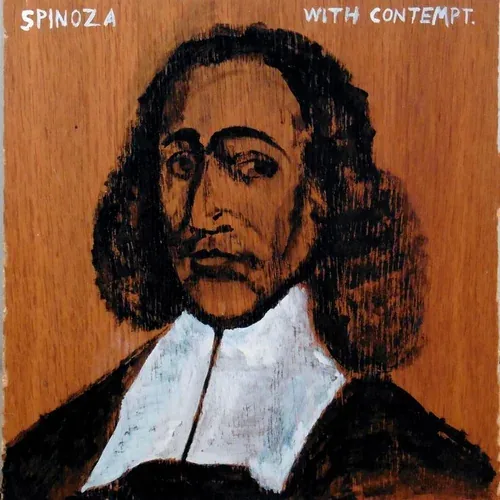
“The premier philosopher of the radical Enlightenment, whose metaphysics of nature and pioneer defense of secular democracy laid the foundations of modern thought.”
Baruch (Benedict) de Spinoza (1632–1677) was a Portuguese-Jewish philosopher born in Amsterdam. Educated in the Keter Torah academy of the Spanish-Portuguese Sephardic community, Spinoza came to reject traditional theological conceptions of a transcendent, personal deity, miracles, and the divine authorship of scripture. Excommunicated by the Amsterdam rabbinic court in 1656, he lived quietly as a lens grinder while producing Ethics and the Theological-Political Treatise—works that inaugurated modern biblical criticism and constitutional democracy.
Western metaphysics was constrained by Cartesian substance dualism and theological scholasticism, subordinating philosophical inquiry to ecclesiastical and biblical dogma.
Pioneered radical philosophical monism (Deus sive Natura / God or Nature), founded modern biblical textual criticism, and constructed the philosophical architecture of secular democracy and freedom of conscience.
Catalyzed the Radical Enlightenment, inspiring German Idealism (Hegel, Schelling), romanticism (Goethe), modern secular biblical scholarship, and liberal constitutional principles.
Tracing the downstream transmission from Baruch Spinoza’s initial intervention through immediate adapters, institutionalization, and enduring consequences in human history.
Pioneered radical philosophical monism (Deus sive Natura / God or Nature), founded modern biblical textual criticism, and constructed the philosophical architecture of secular democracy and freedom of conscience.
Published treatises and dialectic essays debated across academies, courts, and international peer networks.
Adopted by subsequent generations of thinkers, writers, and artists who built directly upon these foundational concepts.
Argued that God and the natural universe are identical, eternal, and governed by universal natural laws.
First modern philosopher to analyze scripture as a historical, human text situated in sociopolitical contexts.
Foundational text of modern biblical criticism, defending freedom of thought, speech, and democratic governance.
Articulated pantheistic substance monism, determinism, and the intellectual love of God (amor intellectualis Dei).
Spinoza’s critique of miracles and biblical interpretation was heavily formed by engaging Maimonides’ Guide for the Perplexed.
Einstein explicitly embraced Spinoza’s pantheism, repeatedly citing Spinoza as his primary philosophical influence.
Spinoza’s defense of toleration inspired Mendelssohn’s Jerusalem on religious liberty.
Methodological Standard: Jewish identity is strictly documented and never inferred from surnames, physical appearance, geography, or stereotypes. Every profile separates identity claims from verified sources.
Born to Marrano refugees from Portugal in the Jewish quarter of Amsterdam; excommunicated in 1656 by cherem.
Born and raised in Amsterdam Sephardic community; never baptized or joined Christianity; lived as a secular independent intellectual.
Without Spinoza, the transition from dogmatic religious monarchism to secular democratic thought would have lacked its rigorous mathematical metaphysical foundation.
How many people, institutions, societies, or disciplines were affected?
Spinoza was subjected to a cherem (excommunication) by the Amsterdam Sephardic community in July 1656.
Albert Einstein stated: "I believe in Spinoza’s God, who reveals Himself in the lawful harmony of the world."
Definitive biography detailing Spinoza’s Amsterdam Jewish context, herem, and radical philosophical treatises.
Incorporated into the permanent canon of human civilization, political philosophy, or world literature.
Catalyzed the Radical Enlightenment, inspiring German Idealism (Hegel, Schelling), romanticism (Goethe), modern secular biblical scholarship, and liberal constitutional principles.
How fundamentally did they alter the structural state of the field or world?
Did the consequences endure decades, centuries, or millennia?
Did they introduce a genuinely new paradigm vs. incremental refinement?
Would this change have happened without this specific individual?
How crucial to Jewish civilization, Torah, ethics, or Israel?
Supreme intellectual originality as the intellectual architect of the radical Enlightenment, with profound if historically agonizing Jewish significance.