1K
Loading Reference Work…

Christian apostle and missionary (c. 5 – c. 64/65)
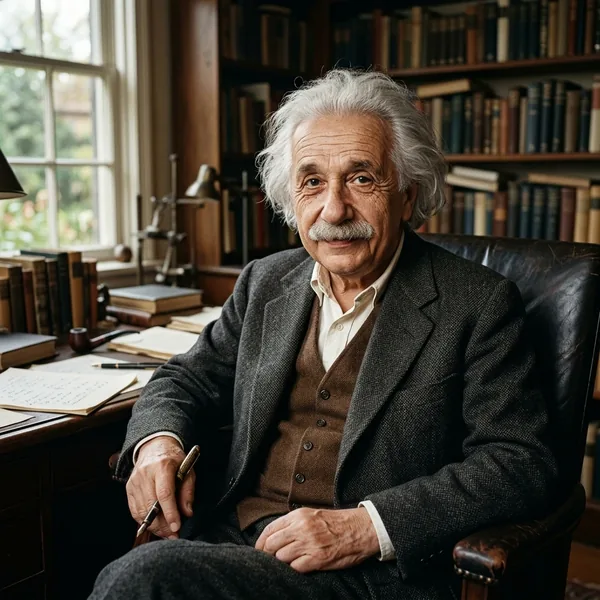
The greatest theoretical physicist of the modern era, who fundamentally revolutionized humanity’s understanding of space, time, gravity, energy, and the quantum universe.
The early Jesus movement was an exclusively Jewish sect concentrated in Jerusalem and Galilee, adhering strictly to the Temple, ritual circumcision, and food laws, with virtually no mechanism to incorporate Gentile believers without full conversion to Judaism.
Following his Damascus road revelation, Paul championed the revolutionary stance that Gentiles enter the covenant of Abraham through faith in Christ without undergoing physical circumcision or adopting the ceremonial Torah code, founding multi-ethnic churches across Asia Minor and Greece.
Transformed a local Jewish messianic movement into a global world religion, composed nearly one-third of the New Testament, and articulated the theological categories of grace, justification by faith, and universal human conscience that defined Western civilization.
Classical Newtonian physics rested on absolute time and Euclidean three-dimensional space, leaving electrodynamics, the constancy of light speed, and mercury orbital anomalies unexplained.
Formulated Special and General Relativity, proved the photon quantum hypothesis via the photoelectric effect, and derived mass-energy equivalence (E=mc²), permanently revolutionizing modern cosmology and quantum foundations.
The cosmic architecture of the universe was unified into dynamic curved spacetime, enabling quantum optics, atomic energy, astrophysics, GPS satellite networks, and the modern standard model.