1K
Loading Reference Work…
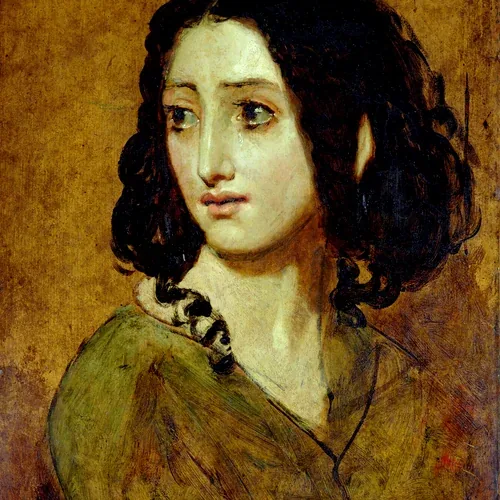
“Hebrew Bible matriarch”
Rachel was a Hebrew Bible figure, one of the Israelite matriarchs, the favorite of Jacob's two wives, and the mother of Joseph and Benjamin, two of the twelve progenitors of the tribes of Israel. Rachel's father was Laban. Her older sister was Leah, Jacob's first wife. Her aunt Rebecca was Jacob's mother. Rachel's eldest son Joseph became a prominent figure in Israelite tradition. This pre-eminence emerges in the story of Joseph, who prepared the way in Egypt for his family's exile there.
Jacob’s emotional center in exile was fragile and isolated while toiling fourteen years under Laban’s exploitation.
Rachel met Jacob at the well, inspired his devotion, gave birth to Joseph (who saved the family from famine) and Benjamin, and died in childbirth on the road to Ephrath (Bethlehem).
Venerated as the eternal symbol of maternal empathy who weeps for her exiled children at her roadside tomb (*Kever Rachel*), immortalized in Jeremiah’s promise of redemptive homecoming.
Tracing the downstream transmission from Rachel’s initial intervention through immediate adapters, institutionalization, and enduring consequences in human history.
Rachel met Jacob at the well, inspired his devotion, gave birth to Joseph (who saved the family from famine) and Benjamin, and died in childbirth on the road to Ephrath (Bethlehem).
Rulings, codes, and hermeneutic principles incorporated into yeshiva curricula and communal adjudication.
Commentaries, codes, and responsa accepted as authoritative standards by Diaspora communities.
Without Rachel, Joseph would never have been born to preserve the house of Israel during the famine, leaving the family to perish in Canaan.
How many people, institutions, societies, or disciplines were affected?
Rachel: Traces Rachel’s unique status in Jewish collective memory as the compassionate intercessor for her exiled descendants.
[Jeremiah 31:15–17] Rachel weeping for her children at Ramah, receiving God’s promise: "There is hope for your future... your children shall return to their own country."
Rachel weeping for her children at Ramah, receiving God’s promise: "There is hope for your future... your children shall return to their own country."
Traces Rachel’s unique status in Jewish collective memory as the compassionate intercessor for her exiled descendants.
Integrated into daily liturgy, lifecycle rites, and Jewish constitutional identity worldwide.
Venerated as the eternal symbol of maternal empathy who weeps for her exiled children at her roadside tomb (*Kever Rachel*), immortalized in Jeremiah’s promise of redemptive homecoming.
How fundamentally did they alter the structural state of the field or world?
Did the consequences endure decades, centuries, or millennia?
Did they introduce a genuinely new paradigm vs. incremental refinement?
Would this change have happened without this specific individual?
How crucial to Jewish civilization, Torah, ethics, or Israel?
Comprehensive multi-dimensional evaluation of civilizational reach, conceptual depth, duration of legacy, and historical causation across Jewish and world history.