1K
Loading Reference Work…
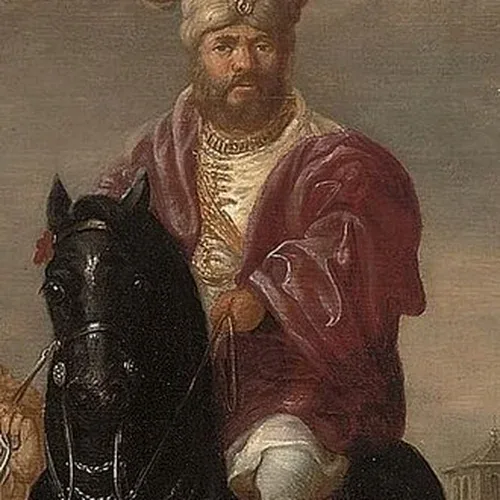
“Biblical figure”
Mordecai is one of the main personalities in the Book of Esther in the Hebrew Bible. He is the cousin and guardian of Esther, who became queen of Persia under the reign of Ahasuerus. The king's grand vizier Haman is offended by Mordecai because of his refusal to bow before him, and when confronted, Mordecai's excuse is that he was a Jew. Consequently, Haman plots to have all of Persia's Jews killed, and eventually convinces Ahasuerus to permit him to do so. Mordecai's loyalty and bravery are highlighted throughout the story as he convinces Esther to use her position as queen to foil the plot of Haman, the king's vizier, to exterminate the Jewish people. His story is celebrated in the Jewish holiday of Purim, which commemorates his victory.
Jews in the Persian capital of Susa were assimilationist and politically vulnerable, facing rising anti-Jewish hostility from Haman the Agagite.
Mordecai refused to bow down in idolatrous obeisance to Haman, uncovered an assassination plot against the king, mobilized the Jewish community in fasting, challenged Esther to act for her people, and was elevated to grand vizier of the Persian Empire.
Secured the survival and defense rights of Persian Jewry, established the archival decrees inaugurating Purim, and set the precedent for Jewish civic leadership and royal diplomacy in the diaspora.
Mordecai’s elevation: second in rank to King Ahasuerus, preeminent among the Jews, seeking the good of his people and speaking peace to all his seed.
Tracing the downstream transmission from Mordecai’s initial intervention through immediate adapters, institutionalization, and enduring consequences in human history.
Mordecai refused to bow down in idolatrous obeisance to Haman, uncovered an assassination plot against the king, mobilized the Jewish community in fasting, challenged Esther to act for her people, and was elevated to grand vizier of the Persian Empire.
Rulings, codes, and hermeneutic principles incorporated into yeshiva curricula and communal adjudication.
Commentaries, codes, and responsa accepted as authoritative standards by Diaspora communities.
Without Mordecai’s vigilance at the King’s Gate and his spiritual challenge to Esther, the royal decree of extermination would have taken the Jewish population completely unprepared.
How many people, institutions, societies, or disciplines were affected?
Mordecai: Analyzes Mordecai’s refusal to bow as an assertion of Jewish religious dignity against megalomaniacal Persian court flattery.
[Esther 10:1–3] Mordecai’s elevation: second in rank to King Ahasuerus, preeminent among the Jews, seeking the good of his people and speaking peace to all his seed.
Analyzes Mordecai’s refusal to bow as an assertion of Jewish religious dignity against megalomaniacal Persian court flattery.
Integrated into daily liturgy, lifecycle rites, and Jewish constitutional identity worldwide.
Secured the survival and defense rights of Persian Jewry, established the archival decrees inaugurating Purim, and set the precedent for Jewish civic leadership and royal diplomacy in the diaspora.
How fundamentally did they alter the structural state of the field or world?
Did the consequences endure decades, centuries, or millennia?
Did they introduce a genuinely new paradigm vs. incremental refinement?
Would this change have happened without this specific individual?
How crucial to Jewish civilization, Torah, ethics, or Israel?
Comprehensive multi-dimensional evaluation of civilizational reach, conceptual depth, duration of legacy, and historical causation across Jewish and world history.