1K
Loading Reference Work…
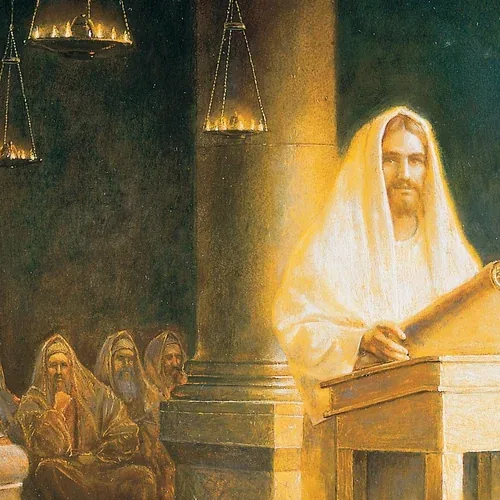
“First-century Jewish preacher and religious leader”
Jesus, also known as Jesus Christ, Jesus of Nazareth, and by various other names and titles, was a 1st-century Jewish preacher and religious leader in the Roman province of Judaea. He is the central figure of Christianity, the world's largest religion. Most branches of Christianity consider Jesus the incarnation of God the Son and the awaited Messiah or Christ. Accounts of Jesus's life are contained in the Gospels, especially the four canonical Gospels of the New Testament. Since the Enlightenment, academic research has produced various views on the historical reliability of the Gospels and the extent to which they reflect the historical Jesus, but virtually all modern scholars of antiquity agree that Jesus existed historically.
First-century Judea was fractured under brutal Roman imperial occupation and sharp internal sectarian rivalry among Pharisees, Sadducees, Essenes, and Zealots. Apocalyptic tension was acute, ritual purity was centered strictly on the Jerusalem Temple, and Gentile nations stood largely outside the covenantal ethics of Israel.
Jesus launched an itinerant Galilean ministry proclaiming the imminent Kingdom of God, articulating radical covenantal inwardness in the Sermon on the Mount (elevating love of enemies, mercy over strict sacrifice, and universal beatitudes), and presenting his own life, death, and resurrection as the cosmic fulfillment of Israel’s redemptive hope.
Catalyzed the birth of Christianity, bringing Hebrew monotheism, biblical ethics, and the Abrahamic narrative to billions of Gentiles worldwide, establishing hospital systems, universal human rights paradigms, Western moral philosophy, and profoundly reshaping the course of global civilization.
The Sermon on the Mount: foundational moral teaching regarding righteousness, humility, forgiveness, and the Kingdom of Heaven.
Tracing the downstream transmission from Jesus of Nazareth’s initial intervention through immediate adapters, institutionalization, and enduring consequences in human history.
Jesus launched an itinerant Galilean ministry proclaiming the imminent Kingdom of God, articulating radical covenantal inwardness in the Sermon on the Mount (elevating love of enemies, mercy over strict sacrifice, and universal beatitudes), and presenting his own life, death, and resurrection as the cosmic fulfillment of Israel’s redemptive hope.
Rulings, codes, and hermeneutic principles incorporated into yeshiva curricula and communal adjudication.
Primary foundational figure.
Theological and revelatory foundation of Paul’s apostolic mission.
Without Jesus, the Jewish diaspora would have remained a distinct regional and provincial tradition under Greco-Roman pagan hegemony; the Greco-Roman world would likely have remained polytheistic, and Christianity—the primary vector through which biblical monotheism permeated global culture—would never have existed.
How many people, institutions, societies, or disciplines were affected?
Jesus of Nazareth: Highlights the thoroughly Jewish Second Temple context of Jesus’s parables, halakhic debates on the Sabbath, and messianic self-understanding against Roman imperial hegemony.
Jesus of Nazareth: Examines Jesus as a first-century Jewish teacher whose ethics and apocalyptic urgency reflect contemporary debates within Tannaitic Judaism and the Dead Sea Scrolls.
[Matthew 5:1–7:29] The Sermon on the Mount: foundational moral teaching regarding righteousness, humility, forgiveness, and the Kingdom of Heaven.
Inaugural synagogue sermon in Nazareth reading from Isaiah 61, proclaiming good news to the poor and liberation to the captives.
Affirmation of the Shema (Deuteronomy 6:4–5) and Leviticus 19:18 as the greatest commandments uniting Torah and Gospel.
Highlights the thoroughly Jewish Second Temple context of Jesus’s parables, halakhic debates on the Sabbath, and messianic self-understanding against Roman imperial hegemony.
Examines Jesus as a first-century Jewish teacher whose ethics and apocalyptic urgency reflect contemporary debates within Tannaitic Judaism and the Dead Sea Scrolls.
Commentaries, codes, and responsa accepted as authoritative standards by Diaspora communities.
Integrated into daily liturgy, lifecycle rites, and Jewish constitutional identity worldwide.
Catalyzed the birth of Christianity, bringing Hebrew monotheism, biblical ethics, and the Abrahamic narrative to billions of Gentiles worldwide, establishing hospital systems, universal human rights paradigms, Western moral philosophy, and profoundly reshaping the course of global civilization.
How fundamentally did they alter the structural state of the field or world?
Did the consequences endure decades, centuries, or millennia?
Did they introduce a genuinely new paradigm vs. incremental refinement?
Would this change have happened without this specific individual?
How crucial to Jewish civilization, Torah, ethics, or Israel?
Comprehensive multi-dimensional evaluation of civilizational reach, conceptual depth, duration of legacy, and historical causation across Jewish and world history.
[Luke 4:16–21] Inaugural synagogue sermon in Nazareth reading from Isaiah 61, proclaiming good news to the poor and liberation to the captives.
[Mark 12:28–34] Affirmation of the Shema (Deuteronomy 6:4–5) and Leviticus 19:18 as the greatest commandments uniting Torah and Gospel.