1K
Loading Reference Work…
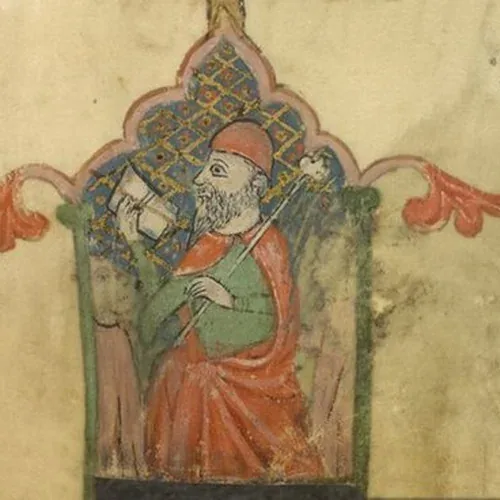
“First century leading authority on Jewish law in the Sanhedrin”
Gamaliel the Elder, or Rabban Gamaliel I, was a leading authority in the Sanhedrin in the early first century AD. He was the son of Simeon ben Hillel and grandson of the great Jewish teacher Hillel the Elder. He fathered Simeon ben Gamliel, who was named for Gamaliel's father, and a daughter, who married a priest named Simon ben Nathanael.
The Jerusalem Sanhedrin under Sadducean high priests was inclined toward aggressive capital punishment of early Christian apostles, while Pharisaic halakhah needed authoritative legal consolidation.
As Nasi of the Sanhedrin and grandson of Hillel, Gamaliel advocated tolerance toward the early apostles with his famous legal maxim ("If this plan or this undertaking is of human origin, it will fail; but if it is of God, you will not be able to overthrow them"), educated the Apostle Paul in Torah, and enacted legal protections for divorced women and converts.
Saved the nascent Jesus movement from violent eradication in Jerusalem, consolidated Rabbinic legal leadership, and was revered in Jewish tradition as the first to bear the title *Rabban* ("our master").
Gamaliel’s defense of the apostles before the Sanhedrin: warning not to be found fighting against God.
Tracing the downstream transmission from Gamaliel the Elder’s initial intervention through immediate adapters, institutionalization, and enduring consequences in human history.
As Nasi of the Sanhedrin and grandson of Hillel, Gamaliel advocated tolerance toward the early apostles with his famous legal maxim ("If this plan or this undertaking is of human origin, it will fail; but if it is of God, you will not be able to overthrow them"), educated the Apostle Paul in Torah, and enacted legal protections for divorced women and converts.
Rulings, codes, and hermeneutic principles incorporated into yeshiva curricula and communal adjudication.
Dynastic transmission of the Nasi presidency in Jerusalem.
Paul was educated at the feet of Gamaliel in Pharisaic law.
Without Gamaliel’s intervention before the Sanhedrin, the apostles Peter and John would likely have been executed in Acts 5, and Saul of Tarsus would have lacked the rigorous Pharisaic education that shaped the Pauline epistles.
How many people, institutions, societies, or disciplines were affected?
Gamaliel the Elder: Examines Gamaliel’s legal stature in both Tannaitic literature and the New Testament as an exemplar of principled judicial restraint.
[Acts of the Apostles 5:34–39] Gamaliel’s defense of the apostles before the Sanhedrin: warning not to be found fighting against God.
[Acts of the Apostles 22:3] Paul’s testimony regarding his education: "brought up in this city at the feet of Gamaliel, educated strictly according to our ancestral law."
Paul’s testimony regarding his education: "brought up in this city at the feet of Gamaliel, educated strictly according to our ancestral law."
Examines Gamaliel’s legal stature in both Tannaitic literature and the New Testament as an exemplar of principled judicial restraint.
Commentaries, codes, and responsa accepted as authoritative standards by Diaspora communities.
Integrated into daily liturgy, lifecycle rites, and Jewish constitutional identity worldwide.
Saved the nascent Jesus movement from violent eradication in Jerusalem, consolidated Rabbinic legal leadership, and was revered in Jewish tradition as the first to bear the title *Rabban* ("our master").
How fundamentally did they alter the structural state of the field or world?
Did the consequences endure decades, centuries, or millennia?
Did they introduce a genuinely new paradigm vs. incremental refinement?
Would this change have happened without this specific individual?
How crucial to Jewish civilization, Torah, ethics, or Israel?
Comprehensive multi-dimensional evaluation of civilizational reach, conceptual depth, duration of legacy, and historical causation across Jewish and world history.