1K
Loading Reference Work…
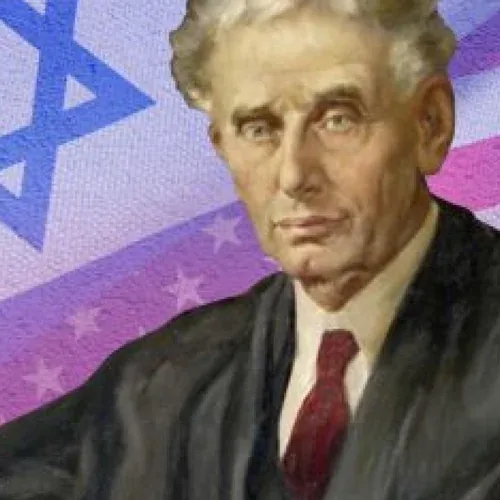
The legendary "People’s Lawyer" and first Jewish U.S. Supreme Court Justice, who created the constitutional right to privacy and pioneered legal realism.
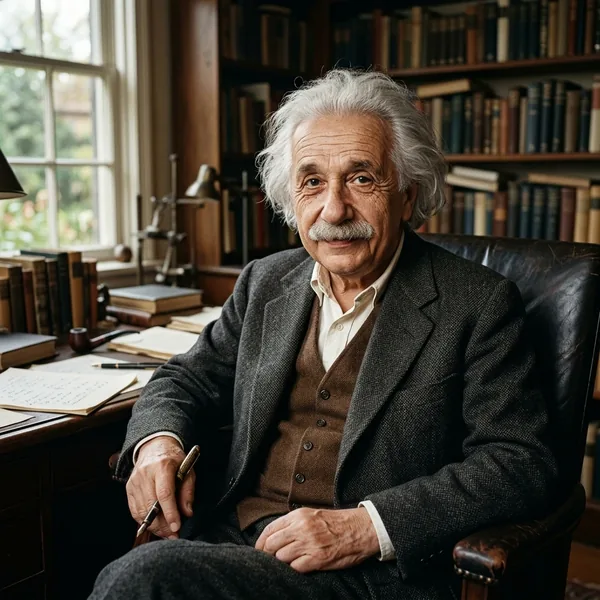
The greatest theoretical physicist of the modern era, who fundamentally revolutionized humanity’s understanding of space, time, gravity, energy, and the quantum universe.
Constitutional law was dominated by abstract formalist legalism and laissez-faire property rights (Lochner era), while privacy had no explicit protection in American law.
Brandeis authored the seminal 1890 Harvard Law Review article "The Right to Privacy" ("the right to be let alone"), invented the empirical Brandeis Brief, and defended uncompromising freedom of political speech in Whitney v. California.
The right to privacy became the foundation for modern civil liberties and digital privacy rights; his economic critiques shaped the New Deal and anti-trust law.
Classical Newtonian physics rested on absolute time and Euclidean three-dimensional space, leaving electrodynamics, the constancy of light speed, and mercury orbital anomalies unexplained.
Formulated Special and General Relativity, proved the photon quantum hypothesis via the photoelectric effect, and derived mass-energy equivalence (E=mc²), permanently revolutionizing modern cosmology and quantum foundations.
The cosmic architecture of the universe was unified into dynamic curved spacetime, enabling quantum optics, atomic energy, astrophysics, GPS satellite networks, and the modern standard model.